


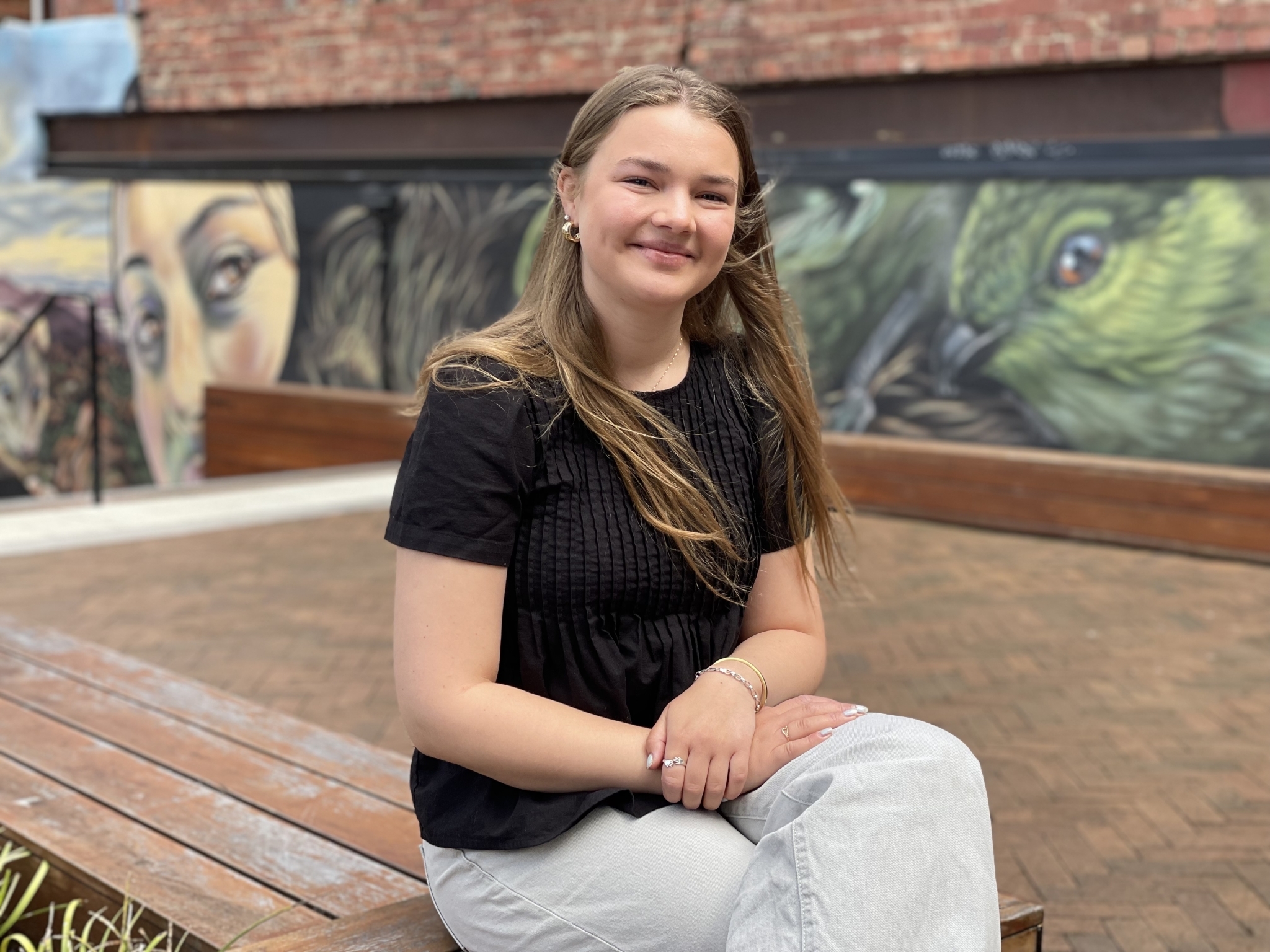
When Swedish exchange student Clara Forssman arrived in Tasmania, she wanted to explore the island's environmental credentials. But a placement with Bank of us would introduce her to a broader understanding of sustainability - and the role that customer-owned organisations can play.
It was Tasmania's natural environment and the University of Tasmania's international standing for climate action that first attracted Clara Forssman to study on the other side of the world.
"I was looking at universities across Europe, but something about Tasmania caught my eye," Clara says. "I saw that UTAS was ranked number one in the world for climate action, and I just felt like that's where I needed to be."
While enrolling in her studies, Clara discovered the University's Sustainability Integration Program for Students (SIPS), which connects students with organisations to explore real-world sustainability contexts.
With a background in natural sciences, she was keen to experience how sustainability was being approached outside the classroom.
The program matched her with Bank of us - not quite the organisation she'd expected.
"When you think about sustainability, a bank isn't the first thing that comes to mind," she says.
"But I'm really happy I got to see this side of it."
Looking beyond the environment
Clara's placement involved exploring the relationship between sustainability and different business ownership models, with a particular focus on mutuals and customer-owned organisations.
Through research and conversations with people working across the sector, she examined how the priorities of customer-owned organisations can differ from those of businesses structured around delivering returns to external shareholders.
For Clara, it was an opportunity to reconsider what sustainability means.
"Coming from natural sciences, I've mostly thought about sustainability in environmental terms," she says.
"But it's a much broader concept than that. This placement has really helped me understand the other angles of sustainability, which I appreciate."
Those other dimensions include governance, community wellbeing, economic resilience, and the long-term interests of customers and communities.
For a customer-owned bank, these considerations are particularly relevant. Without external shareholders, the interests of customers are embedded in the ownership model, creating opportunities to think about long-term value in different ways.
Fresh thinking, shared learning
For Bank of us, Clara brought an independent perspective and a fresh set of questions to conversations about sustainability and the opportunities presented by customer ownership.
During her placement she met with Bank CEO Paul Ranson, who applauded Clara’s insights and perspectives.
"Clara brought a genuine passion for making the world a better place, but what impressed us was how she combined that passion with intellectual curiosity, critical thinking and a commitment to evidence," Paul said.
"There's real value in having someone come into your organisation with fresh eyes, ask different questions and bring a new take on things we might take for granted.
For Clara, the placement offered something equally valuable - the chance to connect academic learning with practical experience.
"A placement is so much more useful than just sitting in a classroom," she says.
"It's more challenging because you have to get out of your comfort zone and work with new people. But it's been great. Everyone has been so welcoming, and I've gained experience I wouldn't have had otherwise."


